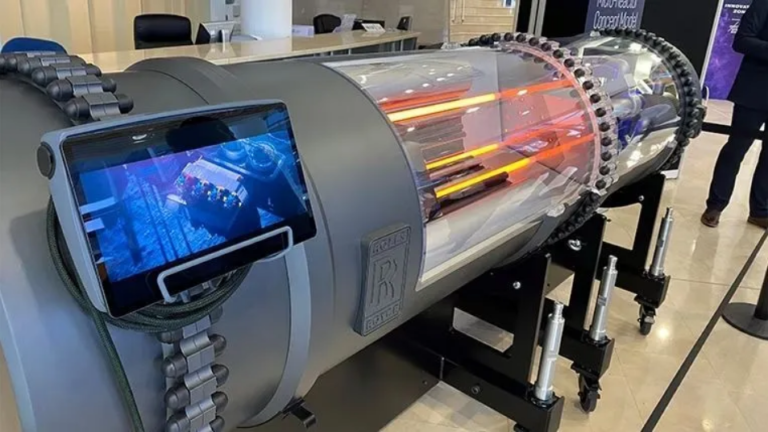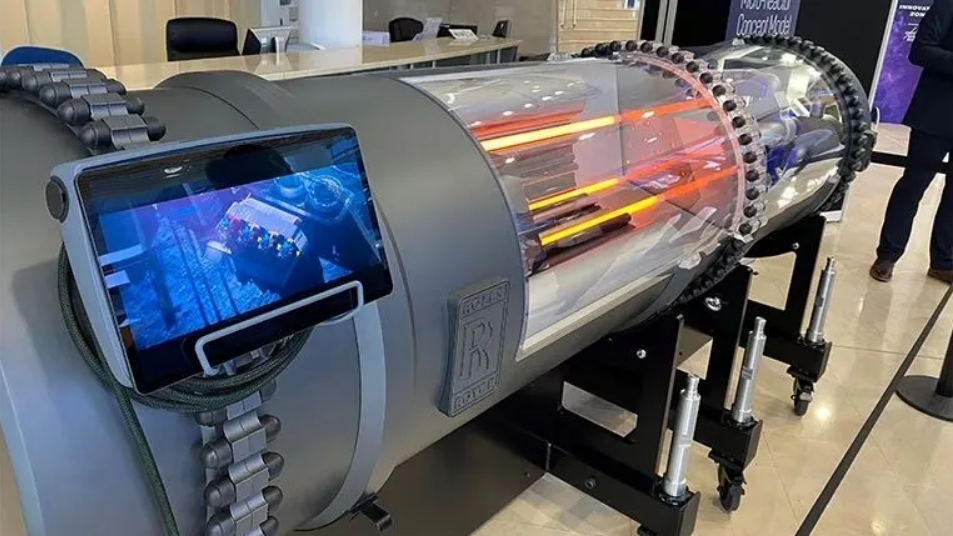
Last week, Rolls-Royce unveiled a micro nuclear reactor model during the UK Space Conference, intended for use by the British space agency in lunar exploration. This micro reactor is the result of research commissioned by the UK Space Agency to explore how nuclear energy could support a future lunar base for astronauts. Rolls-Royce suggests that a moon-ready reactor could be manufactured as early as 2030.
Abi Clayton, Rolls-Royce’s Director of Future Programs, stated, “Micro-reactor technology will provide the capability to support commercial and defense use cases, as well as provide a solution to decarbonize industry and deliver clean, safe, and reliable energy.”
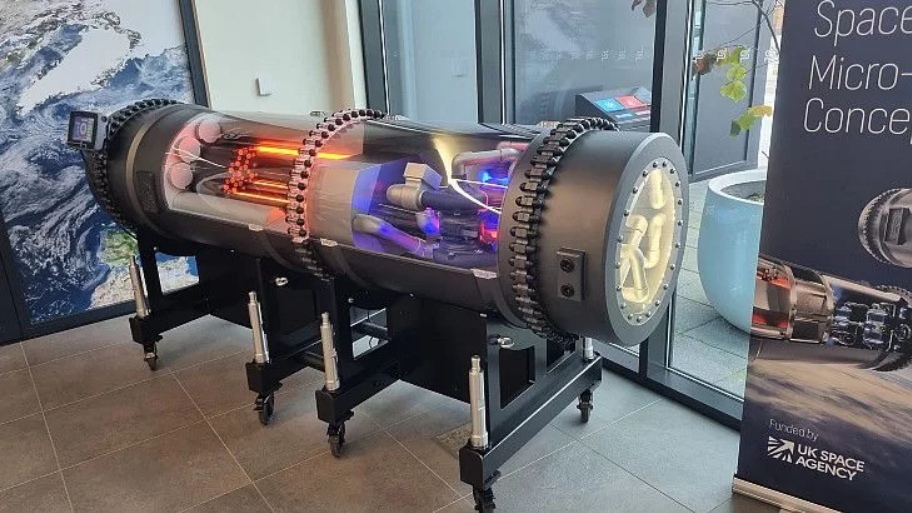
Smaller and lighter than other sources, the micro reactor would provide continuous energy sufficient for inhabiting and exploring planetary surfaces, and could also serve as propulsion for spacecraft. It offers the advantage of operating independently of location, light incidence, or other environmental factors.
Rolls-Royce received a total of £3.9 million from the UK Space Agency for this project, part of the European Space Agency’s Moonlight program aimed at deploying a series of satellites in lunar orbit. The UK agency has earmarked £51 million for companies across the UK willing to develop communication and navigation technologies for these lunar missions.
Meanwhile, a doctoral student from the University of Arizona led a study tracking the origin of two mysterious craters on the Moon, revealing they were caused by Chinese space debris. Tanner Campbell’s team used the Raptor Telescope to analyze light signals reflected from the object’s surface, concluding it was not a SpaceX Falcon 9 but a thruster from a Chang’e 5-T1 rocket. This rocket, part of China’s lunar exploration program, was launched in 2014 with a mission to return lunar soil samples to Earth. Despite initial claims by China that it had been destroyed upon re-entry into Earth’s atmosphere, these were refuted by the US Space Command.